
The right path.
For your place.
No one-size-fits-all promise. Just clear options, real constraints, and questions worth asking.
 01 / SOLUTION
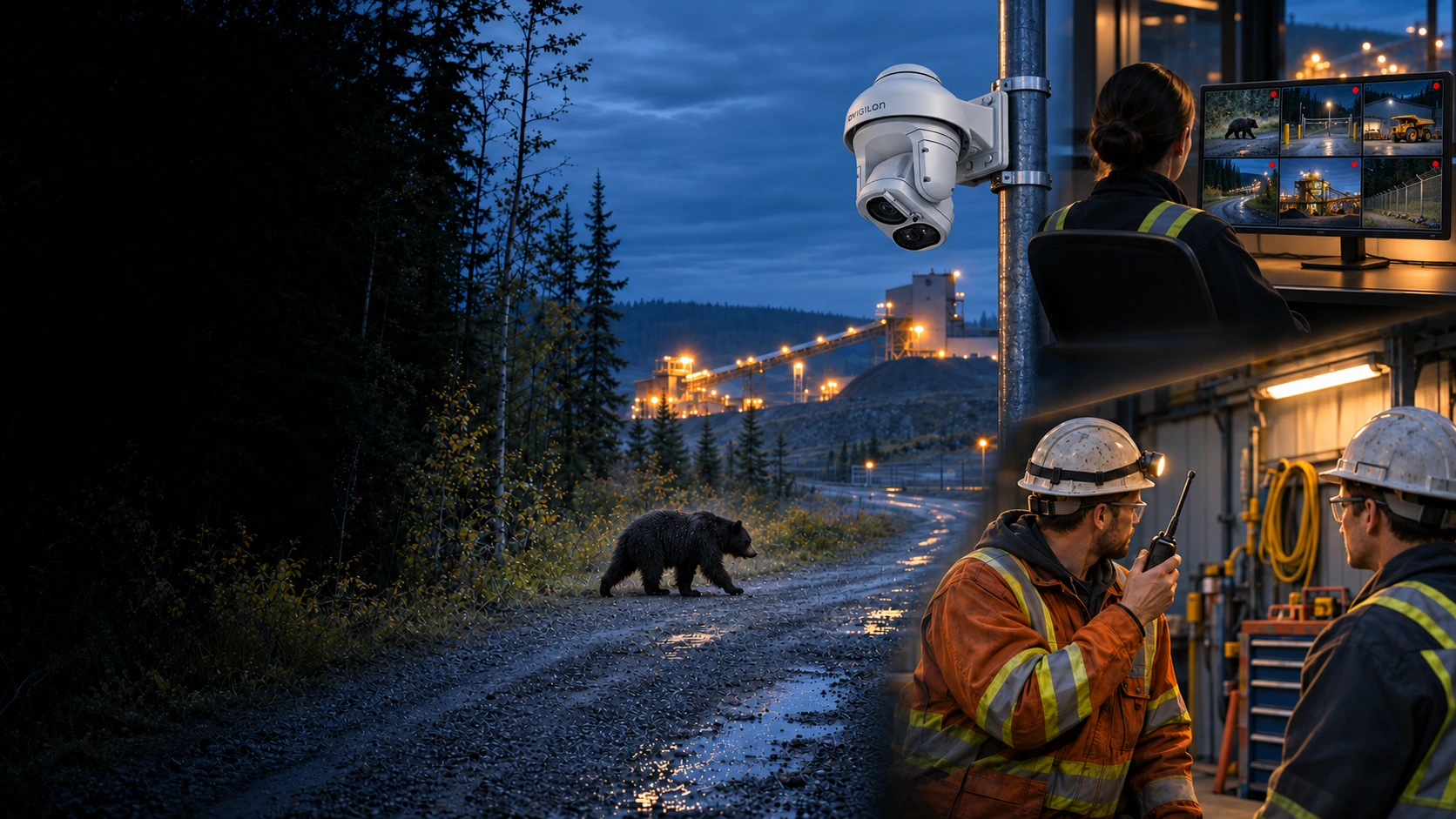
Connect detection to action
Cameras help people see what is happening. Radios keep teams in contact. Connected alerts can bring relevant information from a security system to the people who need it.
Wi-Com starts with the event to detect, the people to notify and the response they need to take. Detection capabilities, system compatibility and radio coverage must be assessed for the chosen setup.
A suitable solution includes more than a connection between devices: alert rules, recipients and testing help make the information useful to the team.
What to think about
- What should trigger an alert
- Who needs to receive it
- Detection and integration capabilities
- Coverage, testing and response procedures
 02 / SOLUTION
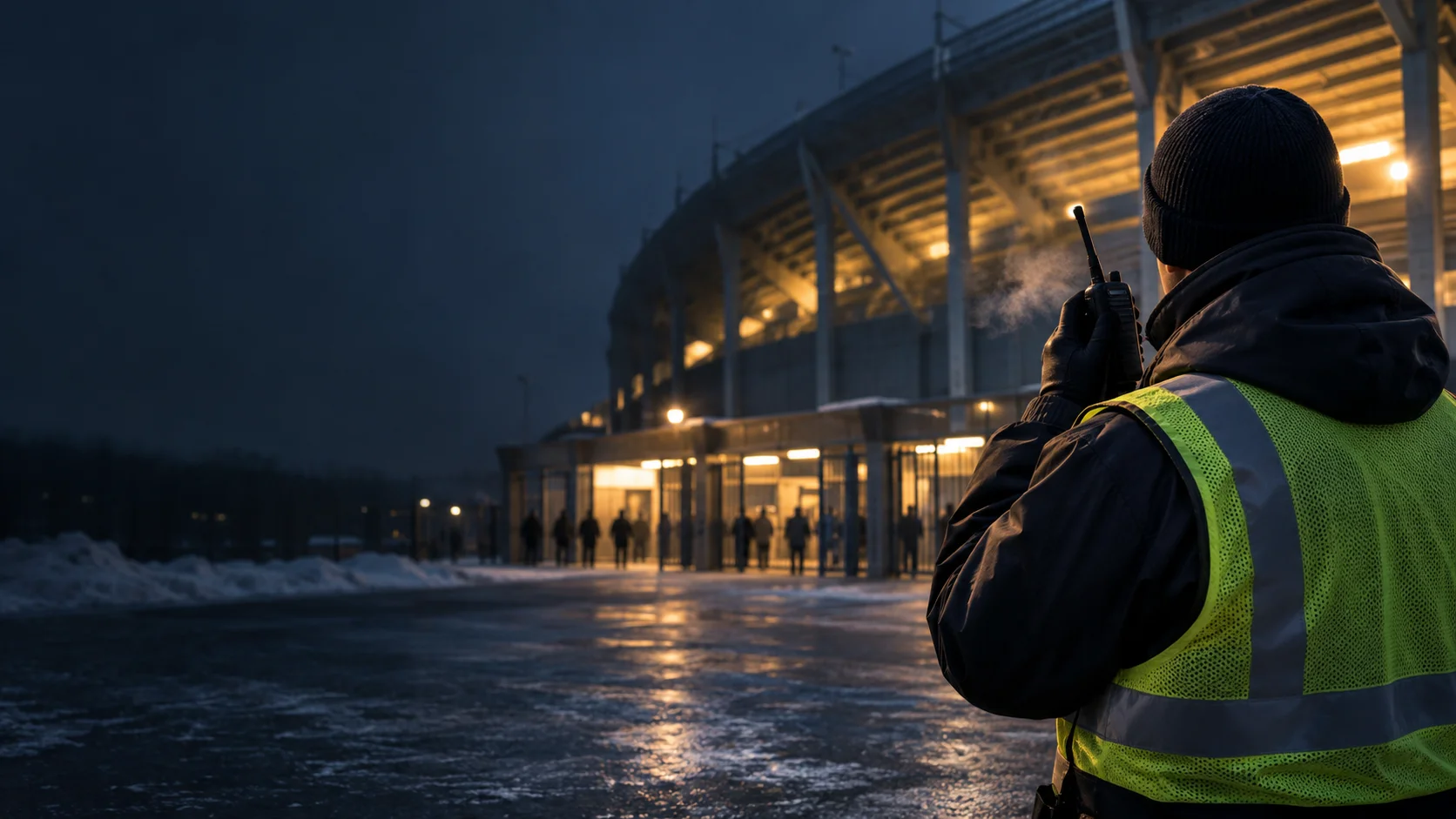
Coordinate a crew
Imagine two crews working out of sight of one another. This is an illustrative situation, not a client deployment. The need is group voice that fits the place and the way people work. Two-way radio lets a person press to talk so the group can hear, within the planned coverage and setup.
Conventional land mobile radio typically does not depend on a cellular network. Terrain, buildings, antennas, power and repeaters affect range. In Canada, business radio usually involves licensed frequencies through ISED. Licensing and frequency planning matter. Wi-Com can help. Rental, licensing and system costs vary.
Motorola Commercial equipment, including CM200d and CM300d mobiles, serves business crews and venues. MOTOTRBO Professional, including the XPR series, supports digital systems with more features. APX and Project 25 are for public safety and emergency services, not a substitute label for event-staff radios. Icom also makes land mobile radios.
Motorola WAVE broadband push-to-talk works over cellular and Wi-Fi and depends on that coverage. It is not satellite. Beyond cell coverage is a separate conversation: Icom has satellite push-to-talk products, which Wi-Com can discuss through its dedicated satellite route. Do not assume ordinary radios use satellite or cellular service.
What to think about
- Where people need to talk
- Group roles and equipment needs
- Licensing, frequency planning and coverage
- Power, charging and suitable accessories
 03 / SOLUTION
See what’s happening
An empty corridor after hours is an illustrative scene. It frames a practical question: how can the right people see and review what matters at a site? Video security and intrusion detection address different parts of that question. Start with the purpose and the people who need access, rather than a wall of screens.
Avigilon provides video security and cloud options. Ajax provides wireless intrusion and alarm systems. Schools use Avigilon video security, and some schools use Ajax. Those are separate general statements, not a claim that one school uses both.
Wi-Com can assess whether an integration is possible for a site. Some systems operate separately. A conversation can cover the areas to observe, who should review recordings, retention expectations and the practical installation environment. Do not assume that two products connect simply because they appear on the same page.
What to think about
- The purpose of each camera or sensor
- Who needs access to information
- Recording, retention and privacy expectations
- Whether integration is possible for this site
 04 / SOLUTION
Improve cellular signal
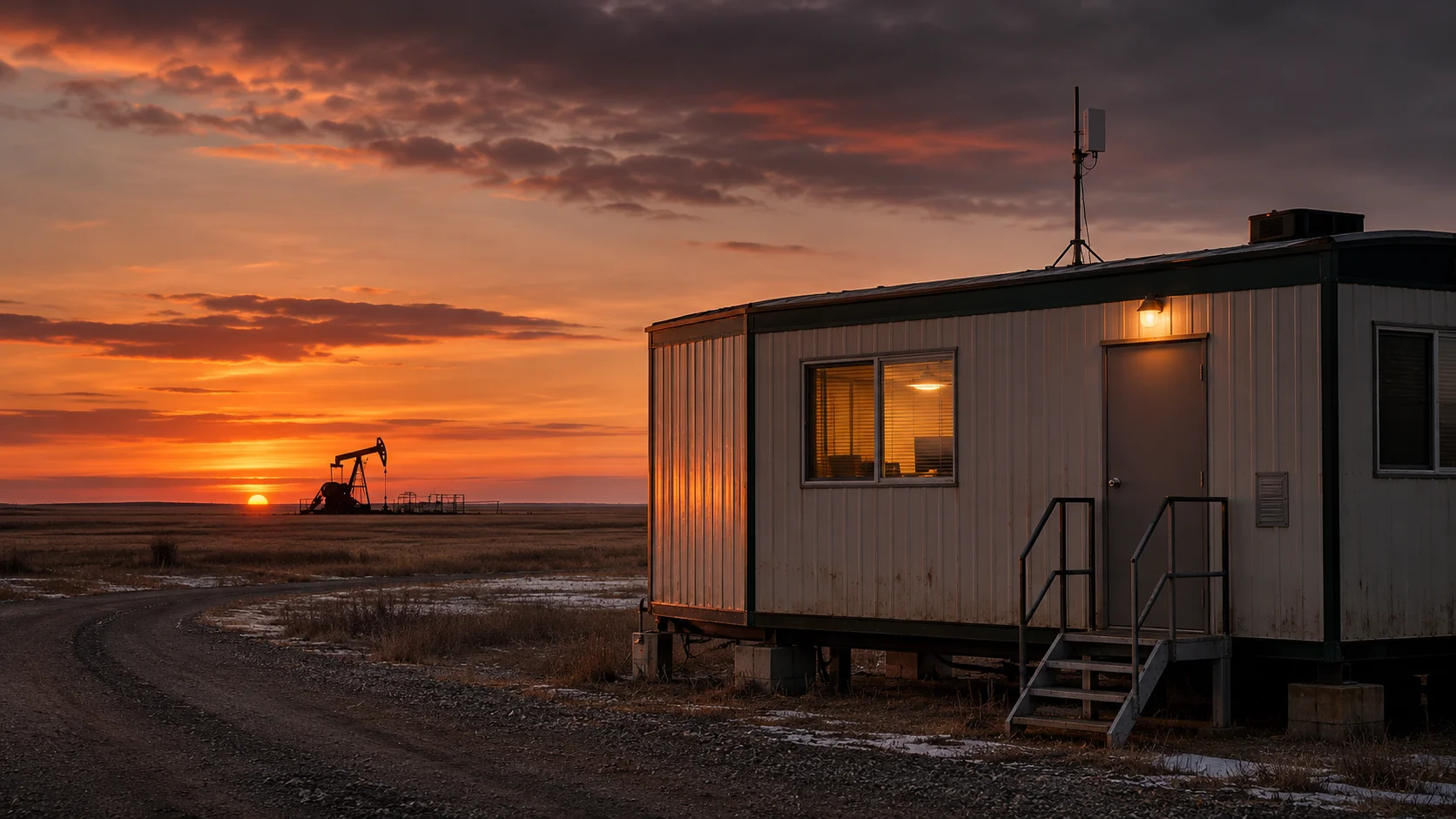
Imagine a phone that can connect outside a building but struggles inside. That illustrative problem is a useful starting point for understanding boosters. A booster amplifies an existing usable outside signal and rebroadcasts it indoors or in a vehicle. It does not create cellular coverage.
SureCall and weBoost offer options for different settings, including buildings and vehicles. The basic path runs from an outside antenna through an amplifier to an inside antenna. Choosing equipment begins with the available signal and the space that needs it, not with a promise of more bars.
Results depend on outside signal, antennas, cabling, the building or vehicle and installation design. In Canada, use ISED-certified, carrier-appropriate models. No speed, throughput or coverage result is guaranteed. If there is no usable outside signal, a booster cannot help; other options such as satellite may be worth discussing, without treating them as a certain fix.
What to think about
- Whether a usable outside signal exists
- Building, home or vehicle requirements
- Carrier suitability and Canadian certification
- Antenna placement and cable runs
05 / SOLUTIONEquip a temporary event
A temporary event has a beginning and an end. The equipment plan should fit both. In an illustrative venue setting, radios can give a team group voice while cellular boosters may be worth assessing where usable outside signal needs to reach an interior space. These are different technologies with different conditions for use.
A rental discussion can begin with the number of people, the area they will cover, whether work happens indoors or outdoors, and the duration. Charging, accessories, instructions and return arrangements can be considered alongside the equipment. These are possible planning steps, not a description of any named event.
Wi-Com offers radio and cellular-booster rental routes. Radio coverage depends on the system and location, and licensing and frequency planning matter. Boosters require usable outside signal. A rental does not remove those constraints. The intended result is equipment matched to the team’s needs, with its limits understood before use.
What to think about
- How many people need equipment
- The area and environment
- Dates and rental duration
- Charging, accessories, instructions and return
Not magic.
A signal path.
Different problems need different paths. See what connects, and where the limits are.
Range depends on terrain and setup.
Simplified illustration. Not live data.